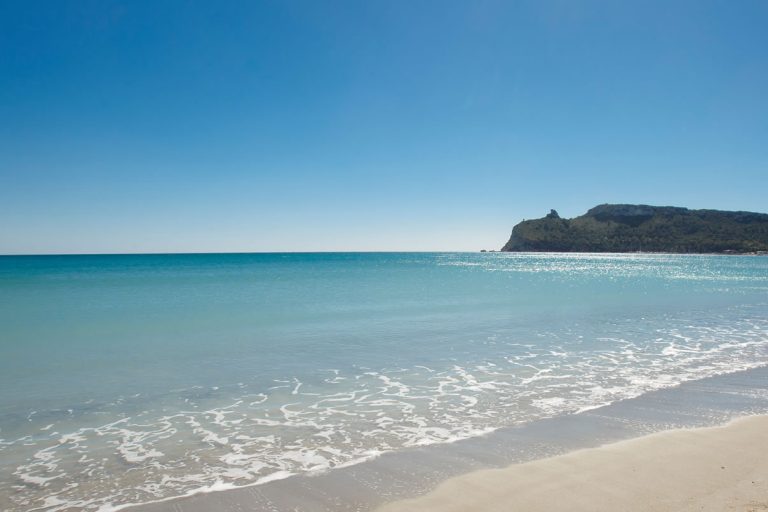
Sella del Diavolo, also known as the Devil’s Saddle, is one of Cagliari’s most recognisable and fascinating natural landmarks. Its distinctive silhouette dominates the Gulf of Angels, separating the long sandy stretch of Poetto Beach from the bay of Calamosca and providing an unmistakable backdrop to the city’s seafront.
Admiring the headland from the beach is already a memorable experience. However, exploring its panoramic viewpoints reveals an even more remarkable landscape, where turquoise Mediterranean waters meet limestone cliffs, fragrant vegetation and traces of the ancient civilisations that once inhabited the area.
Sella del Diavolo is much more than a scenic hiking destination. It is a true symbol of Cagliari, where nature, history and legend come together overlooking the Mediterranean Sea.
Contents:
- Sella del Diavolo: a natural landmark of Cagliari
- The legend of the Devil’s Saddle
- The Sella del Diavolo hiking trail
- Panoramic views from the headland
- History and archaeological remains
- Nature and Mediterranean vegetation
- When to visit Sella del Diavolo
- Practical tips for visiting
- Sella del Diavolo from the sea
- Things to see near Sella del Diavolo
- A one-day itinerary around the headland
- Where to stay near Sella del Diavolo
- The Devil’s Saddle: the spirit of the Gulf of Angels
Sella del Diavolo: a natural landmark of Cagliari
The Sella del Diavolo headland is located on the southern coastline of Cagliari, between Poetto Beach, Marina Piccola and Calamosca.
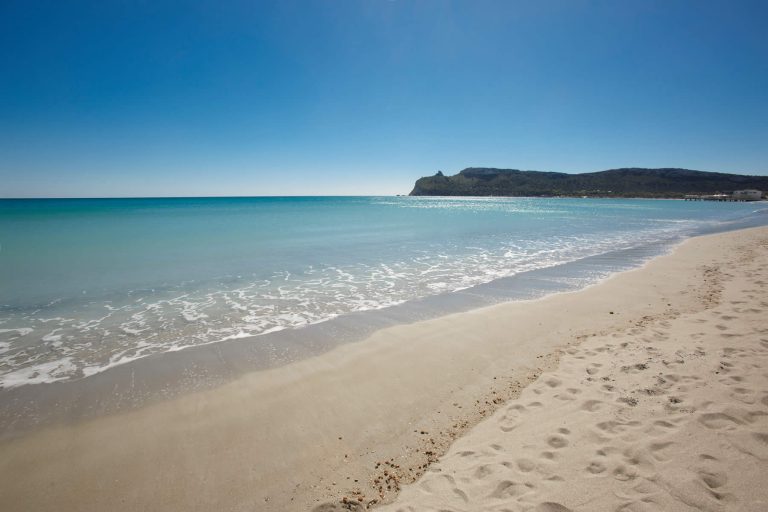
Its unusual shape resembles a large saddle resting above the sea. This distinctive outline, visible from many parts of the city, has become one of the most iconic images of Sardinia’s capital.
From the Poetto seafront, the promontory appears as a natural barrier rising above the western end of the beach. On the opposite side, rocky cliffs descend towards Calamosca and the small coves along the Sant’Elia coastline.
Its location also offers the opportunity to admire several contrasting landscapes at once: the open Mediterranean Sea, the long sandy city beach, the marina and the wetlands surrounding Cagliari.
The legend of Sella del Diavolo: why is it called the Devil’s Saddle?
The headland’s unusual name comes from one of Cagliari’s best-known local legends.
According to the traditional story, a group of demons led by Lucifer became fascinated by the extraordinary beauty of the gulf and attempted to take possession of it.
To protect this magnificent place, God sent his heavenly army, led by the Archangel Michael, to confront the demons.
During the battle, Lucifer was supposedly thrown from his mount and lost his saddle. As it fell onto the headland, the saddle turned to stone, creating the distinctive shape that can still be seen along the coastline today.
Another version of the legend tells a slightly different story: the Devil himself fell onto the mountain, leaving the impression of his saddle in the rock.
The angels’ victory is also said to explain the name Golfo degli Angeli, or Gulf of Angels, which refers to the beautiful stretch of Mediterranean Sea overlooking Cagliari.
Through this legend, the natural landscape becomes part of a mythical story in which the rocky silhouette preserves the memory of a battle between heavenly and demonic forces.
The Sella del Diavolo hiking trail
One of the best ways to discover the headland is to follow its scenic nature and archaeological trail.
The most commonly used hiking access is on the Calamosca side of the promontory. From here, the route gradually climbs through limestone rocks and Mediterranean vegetation, revealing increasingly impressive views of the coastline.
The first section includes some uphill stretches. As the route continues, the path becomes more panoramic and leads towards the higher areas of the headland.
During the walk, visitors can enjoy views of:
- Poetto Beach;
- Marina Piccola;
- The Gulf of Angels;
- Calamosca Bay;
- The salt pans and lagoons surrounding Cagliari;
- The south-eastern coastline of Sardinia.
Although the trail is close to the city, hiking Sella del Diavolo should not be treated as an ordinary urban walk.
The terrain is uneven, with rocky sections, exposed areas and stretches that may become slippery, particularly after rain.
Suitable footwear, sufficient drinking water and effective sun protection are therefore essential.
Visitors should also remain on authorised paths and respect any restrictions, signs or temporary closures in place.
Panoramic views from Sella del Diavolo
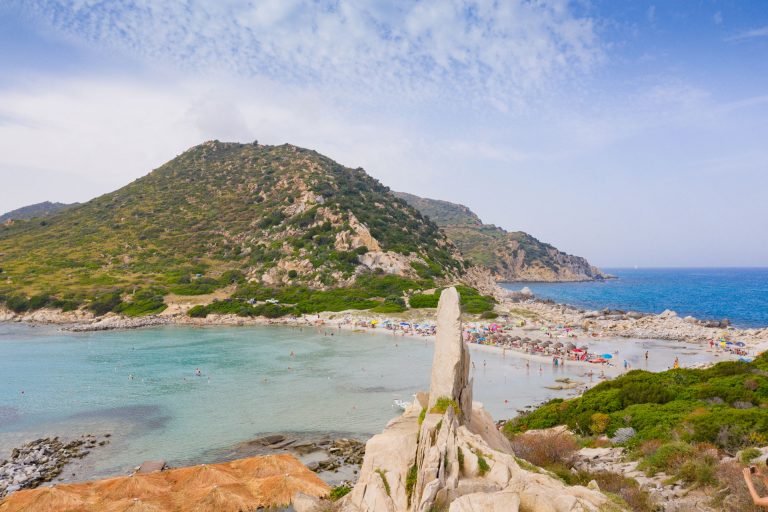
The main reward for reaching the higher parts of the headland is the breathtaking panorama.
Looking east, Poetto Beach stretches for kilometres along the coastline of Cagliari and Quartu Sant’Elena. On clear days, the view extends further along the coast towards Villasimius.
Turning inland, visitors can see the lagoons and salt pans that form part of the area’s natural wetlands, where pink flamingos can also be found.
In the opposite direction, the landscape reveals Marina Piccola, the Sant’Elia district and the rocky coves near Calamosca.
The contrast between the deep blue Mediterranean, pale limestone cliffs and green Mediterranean vegetation creates a particularly photogenic setting.
The changing light also transforms the appearance of Sella del Diavolo throughout the day.
In the morning, the colours of the landscape are often especially clear and vivid. Later in the afternoon, the limestone takes on warmer tones while the sea reflects the golden light of the setting sun.
Sella del Diavolo: a headland rich in history
Sella del Diavolo is not only a place of outstanding natural beauty. Its strategic position overlooking the gulf has also made it important to different populations throughout the centuries.
The headland preserves remains of ancient cisterns, military structures, buildings and observation points.
These traces provide evidence of the area’s historical importance for monitoring the coastline and maritime routes.
One of the most recognisable landmarks is the Torre del Poetto, also known as the Tower of Sella del Diavolo.
Dating back to the late 16th century, the tower was built as part of the coastal surveillance and defence system.
Although partially ruined today, it still overlooks Marina Piccola and Poetto Beach from its elevated position.
Archaeological evidence on the headland also points to activity during the Punic and Roman periods.
Rock-cut cisterns, for example, illustrate the importance of collecting and storing rainwater in an exposed environment without natural freshwater springs.
Walking across Sella del Diavolo is therefore an opportunity to discover several layers of history, from antiquity to more recent military installations.
The natural beauty of Sella del Diavolo
The vegetation covering Sella del Diavolo is typical of the Mediterranean maquis, a natural environment characterised by shrubs and plants adapted to challenging coastal conditions.
Over time, these species have adapted to strong winds, salt spray, limited water resources and high summer temperatures.
Along the trail, visitors can encounter low-growing shrubs, aromatic plants and species capable of thriving among the limestone rocks.
In spring, seasonal flowers add colour to the landscape, while the scent of Mediterranean vegetation accompanies the walk.
The surrounding cliffs and coastal inlets also provide important habitats for local wildlife and marine species.
Protecting this delicate environment is essential. Visitors should avoid leaving litter, collecting plants or walking outside marked routes.
Much of Sella del Diavolo’s appeal comes from the remarkable balance between its proximity to Cagliari and the natural character that large parts of the headland have retained.
When is the best time to visit Sella del Diavolo?
Spring and autumn are generally the most comfortable seasons for hiking Sella del Diavolo.
Milder temperatures make walking more enjoyable and allow visitors to appreciate the vegetation and natural scenery without the intense heat of summer.
Winter can also offer clear skies and particularly sharp views across the coastline. However, it is important to check weather conditions before setting out, especially when strong winds or rain are forecast.
During summer, an early morning or late afternoon visit is usually preferable.
Much of the trail is exposed to direct sunlight, and temperatures can become very high during the middle of the day.
For safety reasons, visitors should plan to complete their hike before darkness falls rather than relying solely on the light from a mobile phone.
Practical tips for visiting Sella del Diavolo
A little preparation can make the hiking experience both safer and more enjoyable.
Before setting out, keep the following recommendations in mind:
- Wear hiking shoes or footwear with good grip.
- Bring enough drinking water for the entire walk.
- Use a hat, sunglasses and suitable sunscreen.
- Avoid the hottest hours of the day during summer.
- Check the weather forecast, particularly wind conditions.
- Keep a safe distance from the edges of cliffs and steep slopes.
- Follow authorised trails and local signs.
- Do not leave litter or damage the surrounding vegetation.
- Carry a fully charged phone, but do not rely on it as a substitute for appropriate hiking equipment.
- Check for temporary trail closures or access restrictions before visiting.
Visitors who are not accustomed to walking on uneven natural terrain may prefer to explore the headland with a knowledgeable local guide.
A guided excursion can also provide an opportunity to learn more about the area’s history, geology and Mediterranean flora.
Discover Sella del Diavolo from the sea
The headland can also be admired from an entirely different perspective: the Mediterranean Sea.
A boat excursion, kayaking trip or stand-up paddleboarding experience offers the chance to appreciate the rocky cliffs, coastal caves and small coves that characterise this stretch of coastline.
Viewed from below, Sella del Diavolo appears even more imposing, revealing a dramatically different silhouette from the one seen at Poetto Beach.
Water-based activities should always be planned according to weather and sea conditions, as well as the experience and abilities of those taking part.
Whenever possible, choosing authorised operators and experienced local guides can help ensure a safer and more enjoyable excursion.
A trip along the Gulf of Angels may also combine views of the headland with stops near Calamosca, Cala Fighera and other accessible coves along the coastline.
Things to see near Sella del Diavolo
The location of the headland makes it possible to organise an entire day combining outdoor activities, beautiful beaches and relaxation.
Marina Piccola
At the foot of Sella del Diavolo lies Marina Piccola, a small marina overlooking the Gulf of Angels.
Visitors can enjoy a walk along the waterfront, admire the boats and appreciate the distinctive shape of the headland from one of the area’s most attractive viewpoints.
Poetto Beach
After hiking, visitors can head to Poetto Beach for a refreshing swim, a relaxing break on the sand or a stop at one of the cafés and restaurants along the promenade.
The contrast between the long sandy beach and the rocky silhouette of Sella del Diavolo creates one of Cagliari’s most recognisable coastal landscapes.
Calamosca Bay
On the western side of the headland lies Calamosca, a more sheltered bay surrounded by rocky slopes and Mediterranean vegetation.
The area is a popular starting point for exploring Sella del Diavolo and can also be an enjoyable place to stop for a swim.
Molentargius-Saline Natural Park
A short distance from Poetto Beach lies Molentargius-Saline Regional Natural Park.
The park is particularly famous for its pink flamingos and distinctive wetland environment.
Visitors can explore the area on foot or by bicycle, following the authorised routes and respecting the natural habitats.
A one-day itinerary around Sella del Diavolo
To make the most of this beautiful part of Cagliari, it is possible to organise a full day of exploration.
Morning: Begin with a hike along the Sella del Diavolo trail, taking advantage of the cooler temperatures and the beautiful morning light. After completing the route, head towards Calamosca or Marina Piccola for a break.
Lunchtime: Continue towards Poetto Beach, where the seafront offers several opportunities to enjoy lunch overlooking the Mediterranean.
Afternoon: Spend some time relaxing on the beach, take a walk along the promenade or explore the natural landscapes of Molentargius-Saline Regional Natural Park.
Evening: End the day admiring the changing colours of the sky and the silhouette of Sella del Diavolo from the beach or a terrace overlooking the Gulf of Angels.
This itinerary combines some of Cagliari’s most characteristic experiences: nature, coastal scenery, history and the pleasure of spending time beside the Mediterranean.
Where to stay near Sella del Diavolo in Cagliari
Staying along the Poetto seafront allows visitors to admire the distinctive silhouette of Sella del Diavolo every day while remaining conveniently located for exploring Marina Piccola, Calamosca and Molentargius Natural Park.
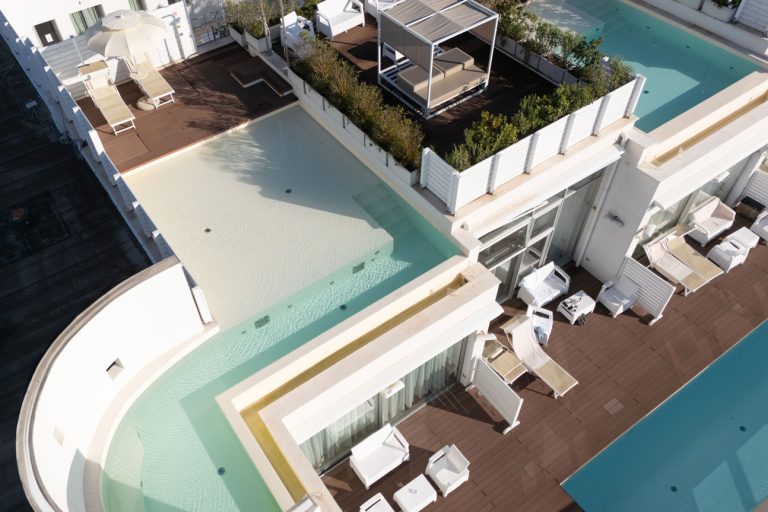
New Bussola – Suites & Luxury Rooms, situated directly on the seafront in Quartu Sant’Elena, offers an appealing base for discovering this beautiful part of the Gulf of Angels.
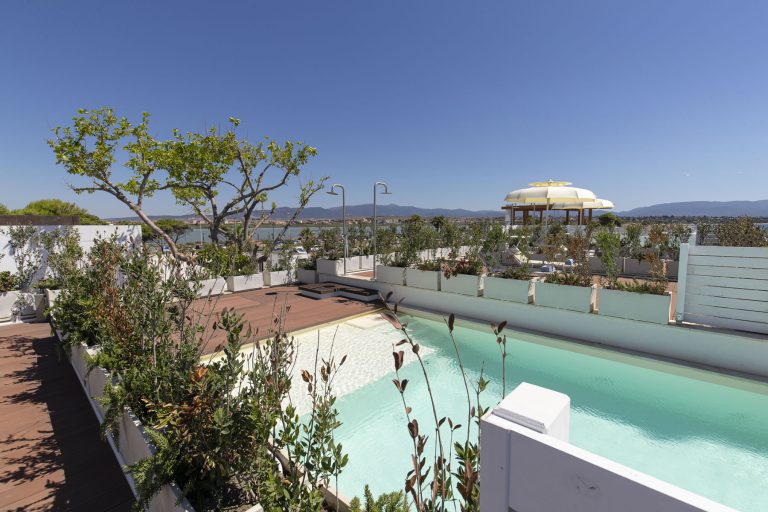
The property features sea-facing accommodation, spaces designed for relaxation and infinity pools with hydromassage facilities.
After a morning exploring the headland, guests can continue their day enjoying the sun terrace, the beach and panoramic Mediterranean views.
The location also makes it convenient to combine outdoor excursions with a relaxing stay by the sea.
Discover the services and amenities at New Bussola or explore our seafront location near Cagliari to help plan your visit.
Sella del Diavolo: the spirit of the Gulf of Angels
Sella del Diavolo brings together many of the elements that make Cagliari such a special Mediterranean destination: the close connection between city and nature, the sea, ancient legends and a history stretching back thousands of years.
Its unmistakable silhouette accompanies days spent at Poetto Beach, while the panoramic views from above reveal the full beauty of the Gulf of Angels.
Whether you discover it on foot, admire it from the sea or simply enjoy its outline from the seafront, the Devil’s Saddle remains one of the most memorable landmarks of southern Sardinia.
Visiting Sella del Diavolo means discovering Cagliari from one of its most authentic perspectives, suspended between the Mediterranean Sea, ancient limestone cliffs and the wide Sardinian sky.