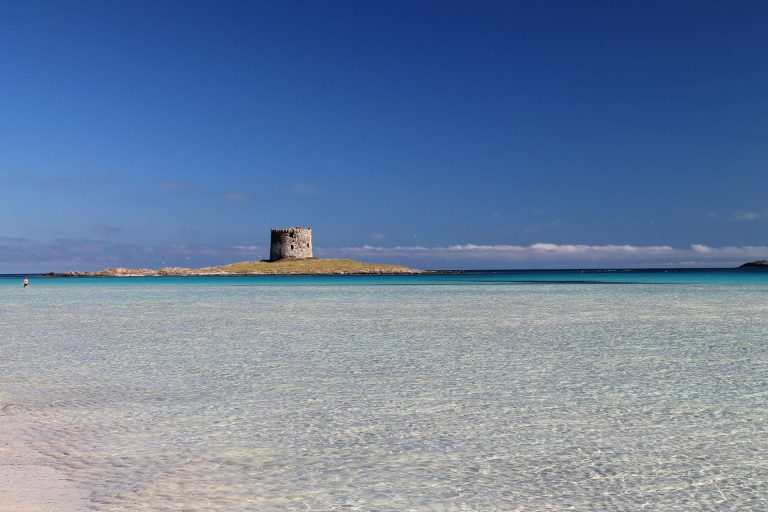
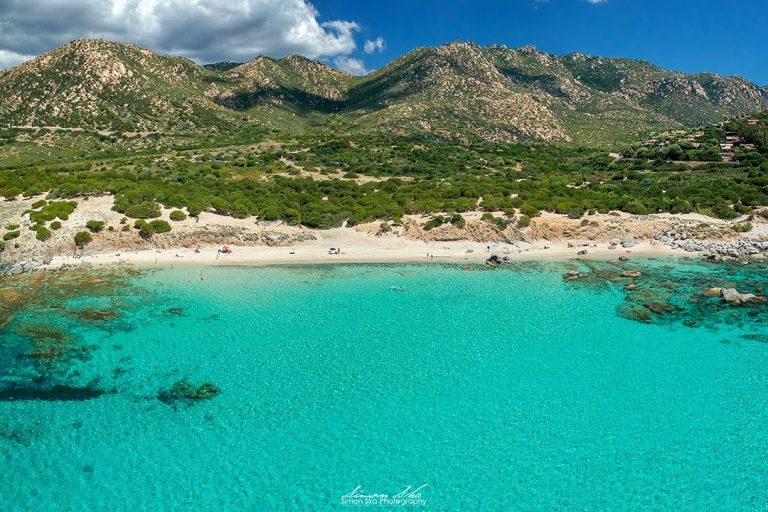
The beaches of southern Sardinia offer some of the island’s most breathtaking coastal scenery. Long stretches of pale sand, sheltered coves, dunes covered in juniper trees and crystal-clear waters alternate along an incredibly diverse Mediterranean coastline.
Starting from Cagliari, travellers can explore both the south-eastern coast towards Villasimius and Costa Rei and the south-western shoreline towards Pula, Chia and Teulada.
This makes Sardinia’s capital an excellent base for organising day trips and discovering a different stretch of coastline every day.
In this guide, we explore 12 of the best beaches in southern Sardinia, highlighting their distinctive features, the experiences they offer and the best times to visit.
Contents:
- Poetto Beach
- Mari Pintau
- Solanas
- Porto Giunco
- Punta Molentis
- Cala Sinzias
- Nora Beach
- Santa Margherita di Pula
- Su Giudeu
- Cala Cipolla
- Tuerredda
- Porto Pino
- Which area of southern Sardinia should you choose?
- The best beaches for every type of holiday
- When to visit southern Sardinia’s beaches
- How to choose a beach according to the wind
- Practical tips for a day at the beach
- Where to stay when exploring southern Sardinia
- Discover the most beautiful beaches of southern Sardinia
1. Poetto Beach: Cagliari’s famous seafront
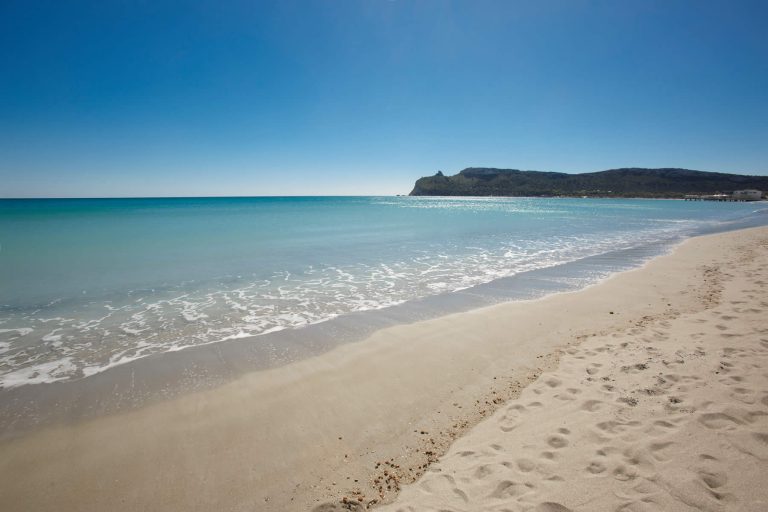
Poetto Beach is Cagliari’s main stretch of coastline and one of the most convenient beaches for visitors staying in the city.
The long sandy shoreline extends beneath the distinctive Sella del Diavolo headland and continues towards Quartu Sant’Elena.
With its beach clubs, kiosks, restaurants and sports facilities, Poetto appeals to a wide variety of travellers.
Families can enjoy the spacious beach, while outdoor enthusiasts can walk, run or cycle along the seafront promenade.
Its proximity to central Cagliari also makes it easy to combine a cultural visit with a few relaxing hours beside the Mediterranean.
Poetto is particularly enjoyable during spring and autumn, when the beach is generally quieter and temperatures remain pleasant.
Best for: families, sports enthusiasts, car-free holidays and beach days close to the city.
2. Mari Pintau: the painted sea
Along the scenic coastal road connecting Cagliari and Villasimius lies Mari Pintau.
Its name means “painted sea” in Sardinian, a perfect description of the remarkable shades of blue, green and turquoise that characterise the water on bright, sunny days.
The beach consists mainly of small, smooth pebbles, with some sandy stretches.
The exceptionally clear water and rocky coastal environment make Mari Pintau particularly popular with swimmers and snorkelling enthusiasts.
However, the bay can become very busy during the summer months.
Arriving early in the morning is therefore recommended, along with bringing water shoes, sufficient drinking water and appropriate sun protection.
Best for: snorkelling, photography, couples and travellers who love crystal-clear water.
3. Solanas: a spacious bay on the eastern coast
Continuing towards Villasimius, visitors reach Solanas, a wide sandy beach located beside the seaside village of the same name.
The shoreline is surrounded by hills covered in Mediterranean vegetation, creating a beautiful natural backdrop.
Near the beach, the sea usually displays lighter shades of turquoise, gradually becoming deeper blue farther from the shore.
Compared with smaller coves, Solanas offers more space and is well suited to spending an entire day beside the sea.
Seasonal beach services and nearby places to eat also make it a practical option for families.
Best for: families, groups of friends, long walks on the sand and full-day beach trips.
4. Porto Giunco: the iconic landscape of Villasimius
Porto Giunco is one of the most famous beaches in the Villasimius area.
Its pale sand, turquoise Mediterranean waters and lagoon behind the shoreline create one of southern Sardinia’s most recognisable coastal landscapes.
On the nearby headland stands the historic Porto Giunco coastal tower, which can be reached along a scenic walking trail.
From the elevated viewpoint, visitors can admire the beach, Notteri Lagoon and the Capo Carbonara headland.
The area forms part of the Capo Carbonara Marine Protected Area, making it especially important to respect local environmental regulations, avoid leaving litter and protect the surrounding vegetation.
During peak season, an early start is recommended, as parking areas and access routes can become particularly busy.
Best for: families, photography, scenic walks and full-day excursions.
5. Punta Molentis: a beautiful bay between two seas
Located between Villasimius and Castiadas, Punta Molentis is a spectacular coastal destination characterised by a narrow strip of land surrounded by the sea.
The main beach features pale sand and exceptionally colourful shallow waters.
Beyond the sandy shoreline, the landscape becomes rockier, retaining a more rugged and natural appearance.
Its beauty and limited size have led to access management measures during certain periods.
Before visiting Punta Molentis, travellers should check the current access regulations, any booking requirements and the availability of parking spaces.
Planning ahead is particularly important during the busiest summer weeks.
Best for: panoramic coastal scenery, swimming, photography and day trips.
6. Cala Sinzias: pale sand and plenty of space
Cala Sinzias, in the Castiadas area, is a long sandy beach along Sardinia’s south-eastern coastline.
The spacious shoreline is complemented by beautiful Mediterranean waters that change from pale green to bright blue.
Thanks to its generous size, visitors can often find a relatively peaceful area even on busier summer days.
The beach includes both public sections and areas with organised services.
Some parts of the seabed slope gradually, making Cala Sinzias a popular choice for families, although sea and weather conditions should always be assessed on the day.
Best for: families, long days on the sand, groups and travellers looking for a spacious beach.
7. Nora Beach: where the sea meets archaeology
Travelling south-west from Cagliari, visitors reach Nora Beach, located near the town of Pula.
What makes this destination particularly special is its proximity to the remains of an ancient Phoenician, Punic and Roman city.
From the beach, visitors can admire the Capo Pula headland, the Coltellazzo Tower and the church dedicated to Sant’Efisio.
A day in this area therefore offers an opportunity to combine relaxation by the sea with an interesting cultural experience.
The seabed is generally shallow in several sections close to the shoreline, making Nora a popular destination for families as well as history enthusiasts.
Best for: families, archaeology enthusiasts and holidays combining beaches with culture.
8. Santa Margherita di Pula: beaches and pine forests
The coastline of Santa Margherita di Pula includes several sandy beaches, small coves and areas characterised by extensive pine forests.
Clear Mediterranean waters and lush vegetation create a pleasant environment for travellers who enjoy alternating sunbathing with moments of relaxation in the shade.
The area includes both publicly accessible beaches and stretches associated with accommodation properties.
Its position between Pula and Chia also makes Santa Margherita a convenient starting point for exploring Sardinia’s south-western coastline.
Best for: families, relaxing holidays and coastal itineraries between Pula and Chia.
9. Su Giudeu: sand dunes and crystal-clear water
Su Giudeu is one of the most iconic beaches in the Chia area.
Its long sandy shoreline is bordered by dunes and Mediterranean vegetation, while a distinctive rocky islet rises from the sea just offshore.
The clear water and spacious beach make Su Giudeu attractive to both families and visitors who enjoy long walks along the coastline.
However, the dune system is a particularly delicate natural environment.
Visitors must use designated access routes and avoid crossing protected areas.
Behind the beach, wetlands provide a habitat for several bird species, adding another dimension to the landscape.
The result is a beautiful combination of sea, dunes and lagoon scenery.
Best for: families, couples, seaside walks and lovers of natural landscapes.
10. Cala Cipolla: a small sheltered bay
A short distance from Su Giudeu lies Cala Cipolla, a small bay nestled between two rocky headlands.
The beach is surrounded by juniper trees and Mediterranean vegetation, while the sea features a clear, pale seabed.
Its atmosphere is more intimate than that of the larger beaches nearby, although the available space is limited.
For this reason, arriving early is advisable during summer.
A walking route also leads from the area towards the Capo Spartivento lighthouse, offering panoramic views of the surrounding coastline.
Best for: couples, swimming, coastal walks and travellers who love small coves.
11. Tuerredda: a bay with Caribbean-like colours
Between Capo Malfatano and Capo Spartivento lies Tuerredda, one of the most celebrated beaches in southern Sardinia.
Its pale sandy shoreline faces a small island just offshore.
Thanks to the sheltered shape of the bay, the water can appear exceptionally calm and transparent when weather conditions are favourable.
The beach’s popularity means that access may be subject to visitor limits, booking requirements or other seasonal restrictions.
Before travelling, it is essential to consult the latest information issued by the relevant local authorities and check parking arrangements.
Best for: swimming, photography, couples and days dedicated entirely to the sea.
12. Porto Pino: white sand dunes in Sulcis
Continuing towards the Sulcis region, visitors reach Porto Pino, a coastal destination famous for its long beaches and impressive pale sand dunes.
The landscape combines sandy stretches, wetlands, pine forests and clear Mediterranean waters.
The beach extends over a considerable distance, offering different experiences depending on which section visitors choose.
However, the dunes form a fragile natural environment.
It is therefore essential to use boardwalks and marked paths, avoiding damage to vegetation or entry into protected areas.
Porto Pino is farther from Cagliari than many other destinations featured in this guide.
Nevertheless, its distinctive landscapes make it an attractive option for a full-day excursion.
Best for: dune landscapes, photography, families and excursions through the Sulcis area.
Which area of southern Sardinia should you choose?
Southern Sardinia’s coastline can be divided into three main areas, each offering a different seaside experience.
From Cagliari to Villasimius
The south-eastern coastline is ideal for travellers who want to combine rocky coves, beaches with organised services and clear waters suitable for snorkelling.
Some of the most popular destinations include Poetto, Mari Pintau, Solanas, Porto Giunco and Punta Molentis.
This stretch is particularly appealing for scenic drives and excursions that combine several coastal stops.
From Villasimius to Costa Rei
Continuing towards Castiadas and Costa Rei, the landscape is characterised mainly by long, spacious sandy beaches.
Cala Sinzias, for example, is well suited to travellers looking for more space and the opportunity to spend an entire day by the sea.
From Pula to Teulada
The south-western coastline combines archaeological sites, pine forests, sand dunes and sheltered bays.
Destinations such as Nora, Santa Margherita di Pula, Su Giudeu, Cala Cipolla and Tuerredda offer the opportunity to create remarkably varied itineraries.
Travellers can combine cultural attractions with long sandy beaches and spectacular natural landscapes.
The best beaches in southern Sardinia for every type of holiday
Choosing the right beach depends on your interests and the kind of experience you want to enjoy.
- For families: Poetto, Solanas, Cala Sinzias, Nora and Su Giudeu.
- For snorkelling: Mari Pintau, Punta Molentis and Cala Cipolla.
- For sand dunes and natural scenery: Su Giudeu and Porto Pino.
- For combining beaches with culture: Nora.
- For a scenic day trip: Porto Giunco, Cala Cipolla and Tuerredda.
- For staying close to Cagliari: Poetto and Mari Pintau.
These suggestions can help travellers choose a destination based on their preferences, available time and the conditions expected on the day.
When is the best time to visit southern Sardinia’s beaches?
June and September are often excellent months for travellers seeking pleasant temperatures and fewer visitors than during the busiest weeks of summer.
In July and August, the most famous beaches can become very crowded.
Arriving early, checking parking arrangements and confirming any booking or visitor access requirements are therefore particularly important.
Spring and early autumn are also appealing seasons for coastal walks and exploring the surrounding landscapes.
However, some seasonal beach facilities may not operate every day outside the main summer period.
How to choose a beach according to the wind
Before setting out, it is always useful to check the weather forecast and wind direction.
Conditions can vary significantly between the eastern and western sides of southern Sardinia’s coastline.
When one area is particularly exposed to the wind, a bay facing a different direction may offer calmer sea conditions.
Checking the forecast is also essential when planning activities such as snorkelling, kayaking and boat excursions.
Wind direction is only one consideration: wave conditions, local warnings and the characteristics of each beach should also be taken into account before entering the water.
Practical tips for a perfect day at the beach
A little preparation can make exploring southern Sardinia’s beaches more enjoyable.
- Set out early during July and August.
- Check beach access, booking requirements and parking arrangements in advance.
- Bring enough drinking water, a hat and suitable sun protection.
- Wear water shoes at pebble beaches and rocky coves.
- Respect sand dunes, boardwalks and protected natural areas.
- Never remove sand, shells or stones from the beach.
- Take your rubbish with you when bins are unavailable.
- Avoid leaving valuables or personal belongings unattended inside your car.
These simple precautions help protect the coastline while making your day safer and more comfortable.
Where to stay when exploring southern Sardinia
Choosing accommodation in the Cagliari and Poetto Beach area makes it easy to visit the historic city centre while also providing a convenient starting point for discovering the beaches of the south-eastern coastline.
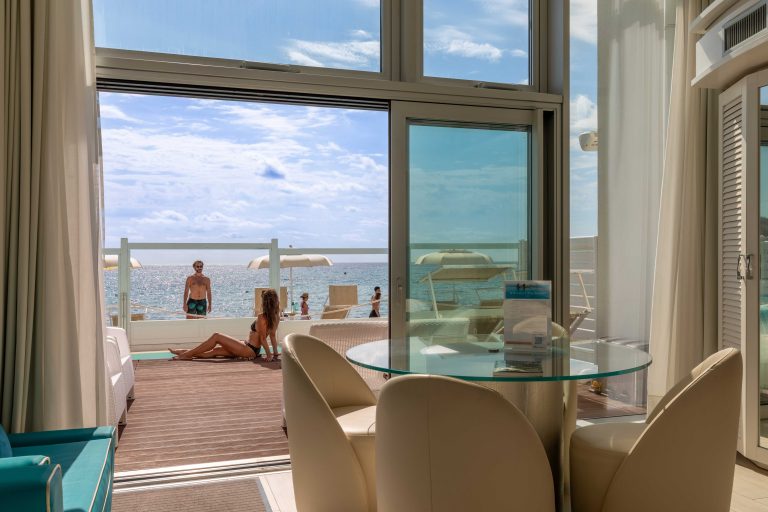
New Bussola – Suites & Luxury Rooms, located directly on the Poetto seafront in Quartu Sant’Elena, is an appealing base for exploring Cagliari, Mari Pintau, Solanas and Villasimius.
After a day spent discovering the coastline, guests can relax in their sea-facing accommodation or arrange, subject to availability, an experience in the seafront infinity pools with hydromassage.
The property’s location makes it possible to combine beach excursions with the comfort of staying directly beside the Mediterranean.
Discover the services and amenities at New Bussola, find out where New Bussola is located or explore activities and experiences in southern Sardinia.
Discover the most beautiful beaches of southern Sardinia
From the scenic bays along the road to Villasimius to the sand dunes of Chia and Porto Pino, the beaches of southern Sardinia offer coastal landscapes suited to every type of holiday.
Travellers looking for convenience can choose Poetto or Solanas.
Snorkelling enthusiasts may prefer Mari Pintau or Punta Molentis, while visitors seeking spectacular natural scenery can explore Porto Giunco, Su Giudeu, Tuerredda or Porto Pino.
With a little planning, it is possible to discover a different stretch of coastline every day and enjoy a Sardinian holiday filled with crystal-clear waters, Mediterranean nature and authentic local culture.